peptide4pups
A plain-language guide for puppy owners

A peptide for pups is a question for the vet, and these notes help you ask it

Peptides are short strings of small parts; proteins are built from those parts too. Online adverts promise they can help dogs with joints, healing, weight and ageing. Your puppy cannot tell a vet how it feels. You can, if you come ready.

This page is the packing list: what to write down, what to put in the bag, and what a vet needs in place before any medicine comes up. It is written for owners, sells nothing and does not stand in for an exam.

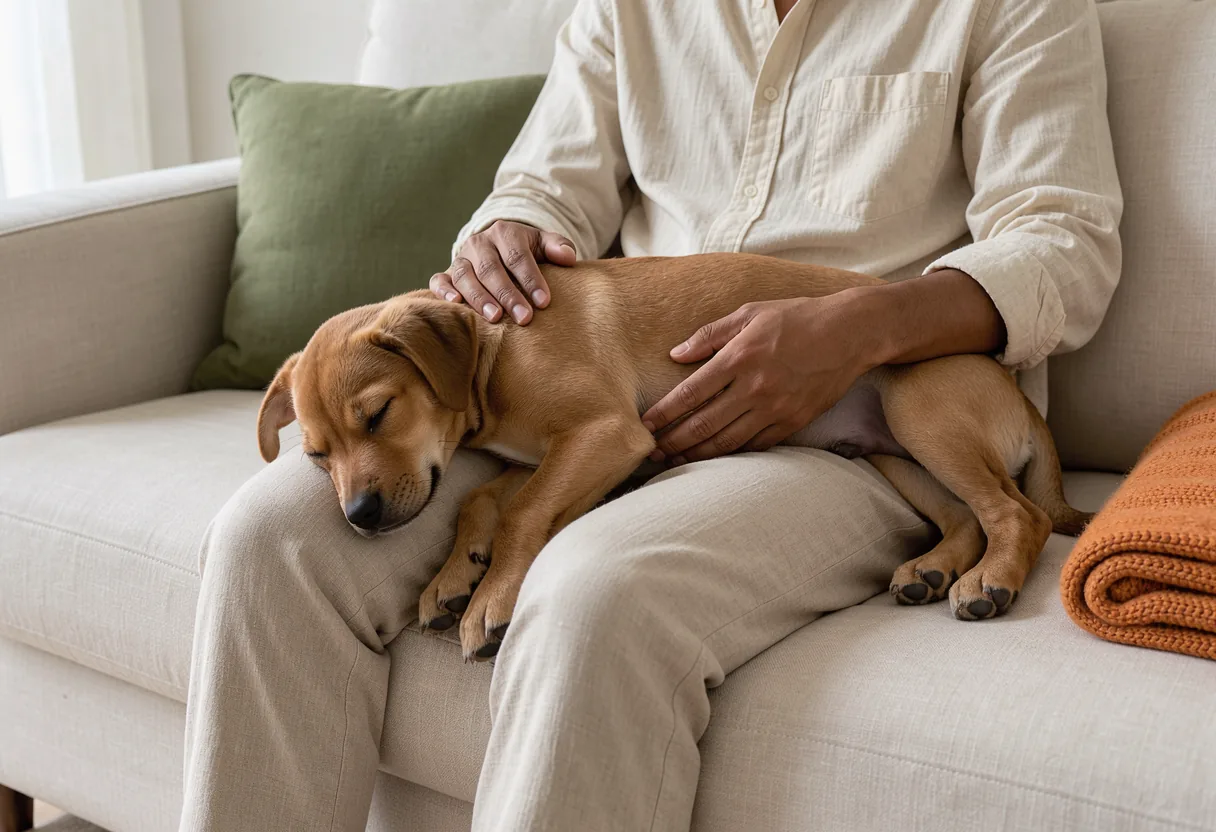
A sleepy puppy stretched across its owner's lap on a sofa, the owner's hands resting on its back

Four facts to carry in with you

The US Food and Drug Administration (FDA) is the government agency that reviews animal medicines. The findings below come from its records and published research, checked in September 2026.

Approved for dogs?

No

Products sold online as GHK-Cu, KPV, BPC-157 or TB-500 hold no FDA approval, conditional approval or index listing for any animal.

That was the answer from FDA database searches run on September 30, 2026.

Conditional approval means a drug has passed checks on how it is made and whether it is safe, while full proof it works is still being gathered.

An index listing lets certain drugs be sold for animals such as ferrets and pet birds; this route excludes dogs.

From: Animal Drugs @ FDA and the FDA Index, searched September 30, 2026.

Tried on sick pet dogs?

Not found

PubMed is a collection of medical research papers. A search there on September 30, 2026 found no treatment trial of BPC-157 or TB-500 in sick or injured pet dogs.

That search did not cover every place research might appear.

The dog work that does exist used healthy lab beagles, to see how fast the body clears the peptide and whether it does harm.

From: PubMed searches and two lab beagle papers, read September 2026.

Anything about puppies?

A blank

The sources behind this page say nothing about peptides in puppies in particular.

No study of how a growing dog handles one turned up, so that gap belongs on the list of things to ask.

From: the same searches, which found no study of young dogs.

Who decides?

Your vet

Giving an approved medicine for a use absent from its label, such as another illness or another kind of animal, is called off-label use.

Only a licensed vet can decide on that use.

That route covers approved drugs only, so it cannot make an unapproved peptide a lawful pet medicine.

From: the federal rule on off-label animal drug use, read September 2026.
Write down what you have noticed

A vet works from two things: the exam, and what you report. A puppy has a short life story, so small details carry weight. Tick each line once it is on paper.

Notes

Write it the way you would tell a friend. Plain words beat medical ones.

Times help more than feelings. "Since Saturday morning" tells the vet more than "for a while".

If the trouble only shows up at home, a clip of it saves a lot of guessing in the exam room.

Close view of a puppy's front legs and paws mid-step on a wooden kitchen floor
A packed canvas tote on a pale floor with a lead, a folded towel and a blank notebook

What to bring in the bag

The goal is simple: the vet sees the same things you have seen, and the exact product you were looking at.

Notes

Bringing something you already bought is not a confession. It is the quickest way for the vet to see exactly what it is.

The FDA itself suggests taking a written list of every drug and supplement an animal gets to the vet.

Label wording tells the vet a lot. Sellers of these products often print phrases like "not for veterinary use" or "research use only" on them.

Approved animal medicines carry an approval line with an NADA or ANADA number. Those letters identify the approval application: NADA for a brand-name medicine, ANADA for a generic version. A generic works in the animal's body as the brand-name version does.

A tiny label may lack that line, so the box or leaflet matters too; the vet can check the number in FDA records.

What a vet-client-patient relationship means

Vets shorten it to VCPR. It is the working bond the federal rules expect before a vet can use a medicine off-label for your puppy.

It is in place when all three are true:

Notes on the rules

Under the federal rule, the vet has to have seen your puppy recently, in person or where it lives. Photos, videos or an online form alone do not count.

State rules also apply. California accepts a live video exam to start the relationship under state law; Texas does not accept electronic contact alone.

California's video rule does not replace the federal requirement for off-label use: a recent in-person exam or visit to where the puppy lives.

If your puppy seems unwell today

After any medicine or product

The FDA's first step for an owner whose pet reacts badly is the vet: get the animal seen and treated, then report what happened.

An emergency vet clinic is the right door outside normal hours.

If it may have swallowed something harmful

Two animal poison lines in the US answer day and night. ASPCA Animal Poison Control notes that it may charge for a consultation.

Pet Poison Helpline lists an $89 fee per incident, follow-up calls included, as of September 2026.

Each service prints its number on its own official website, and both numbers and fees can change.

Next: the questions to ask Ask about your puppy, the product, other choices and follow-up care. Open the questions